| Introduction | Artemis | Iron Ranges | Weipa |
| OTL | The Tip | Conclusion |
Introduction
For almost two weeks in September, I explored the remote Cape York Peninsula. My travels took me from arid cattle stations of the interior to lush tropical rainforests of the Iron Ranges. I was able to see the sun rise from the Coral Sea and set into the Gulf of Carpentaria.
My trip began on Thursday, September 14, 2006 as I left Kingfisher Park near Julatten and headed north up the Peninsula Development Road. I spent the nights of the 14th and the 15th on Artemis Station in search of the endemic and highly endangered Golden-shouldered Parrot. On the morning of Saturday, September 16th, I headed north again and this time east as well into the lowland rainforests of the Iron Range. After five nights here, I headed back west all the way to the coast to the small community of Weipa where I refueled and resupplied before heading north along the Old Telegraph Line to the Tip. After visiting the northern most point on the Australian continent, I headed back south with a stop at Musgrave to search for the Golden-shouldered Parrot again, finally returning to Julatten on Tuesday, September 26, 2006.
This essay is broken up into several sections since it is fairly long. The navigation links above and below will help ease your navigation.
Artemis Station
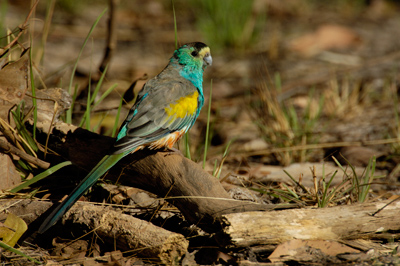
Artemis Station is a working cattle station in the central southern portion of the peninsula. The station covers a significant portion of land, including the core range of the highly endangered and endemic Golden-shouldered Parrot. This beautiful parrot is only found in a small area in the southern portion of the Cape York Peninsula where it nests in the large ant hills that dot the landscape.
I arrived in the area on September 14th and planned to spend two nights, leaving midmorning on the 16th to continue north. This would give me two mornings and two evenings to sit and watch for the birds. However, despite spending over 12 hours sitting next to the small pond over 3 days, the birds never came in to drink. During my time there I saw a wide range of other birds including my first Red-tailed Black-Cockatoos and numerous honeyeaters coming in to bathe, but no Golden-shouldered Parrots.
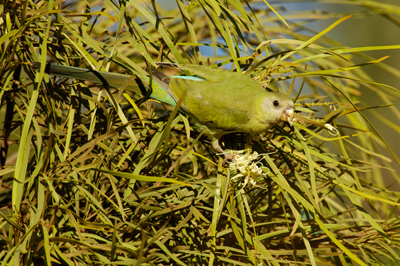
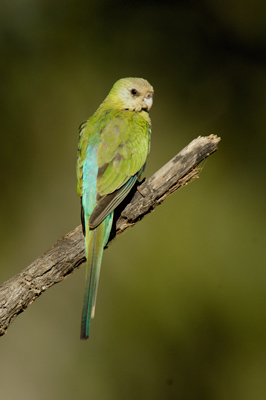
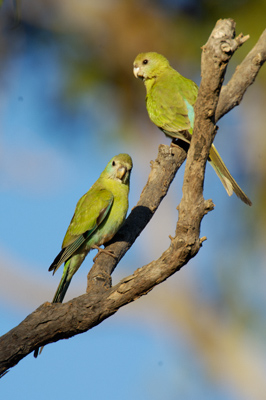
Disappointed, I moved on but returned on September 24, 2006 on my way back south. This time I was armed with additional information of a recent sighting. After a brief walk, I heard a flock of birds flying low over the trees. A few minutes later, I discovered three Golden-shouldered Parrots sitting in the top of a tree just a short way away. Finally, one of my most desired birds, sitting in front of me. After excellent views of two males and a single female, I headed back to the car. It was my 300th species for my year.
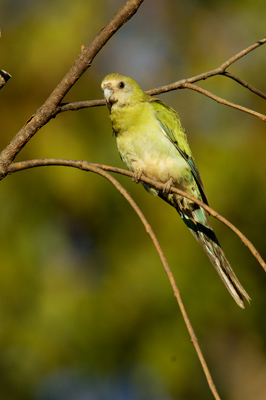
The next morning, I got up at dawn and began to hear that once unfamiliar call note of the Golden-shouldereds. Within just a few seconds I was able to locate a flock of birds, probably a dozen or so, at the top of a tree fairly close by my car. Over the next few hours, I managed to photograph these beautiful birds to my heart's content. At one point, I counted 25 birds feeding on the ground in front of me, five of which were males.
Iron Ranges
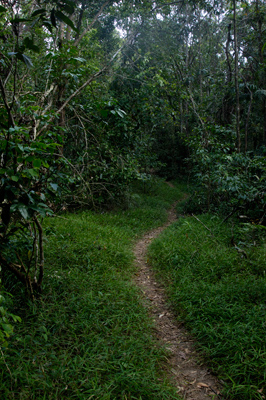
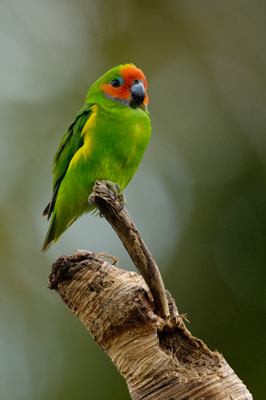
The Iron Ranges are home to the largest lowland tropical rainforest in Australia. They are home to a fantastically diverse array of life, much of which is endemic to the region. Many of the birds here are more closely associated with Papua New Guinea than with Australia, and Iron Ranges is the only place in Australia where many species can be seen.
When I arrived on the afternoon of September 16, 2006, the rainforest did not appear as I had envisioned. This past April, Tropical Cyclone Monica devastated the area causing massive flooding and canopy damage throughout the region. Evidence of this storm could be seen by the number of downed trees and the lack of any vegetation along the creek beds.
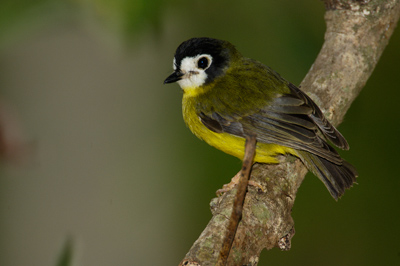
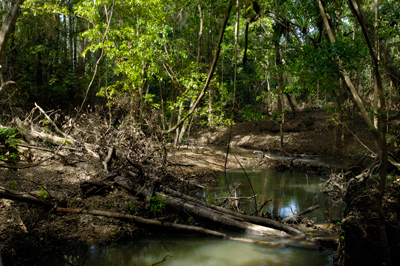
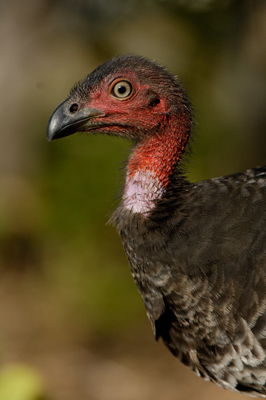
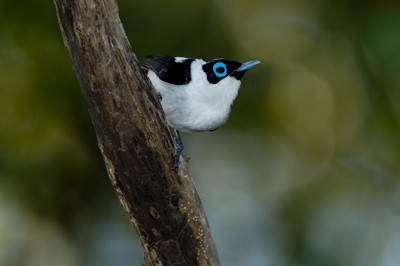
During the five nights I was camped at the small campsite at Cook's Hut, I explored the area mostly from my campsite to Portland Roads. I was able to see many of the local specialties including Palm Cockatoo, Eclectus Parrot, Yellow-billed Kingfisher, and Green-backed Honeyeater. I was fortunate enough to see several of Iron Range's nocturnal residents including the Spotted Cuscus and Marbled Frogmouth.
Weipa
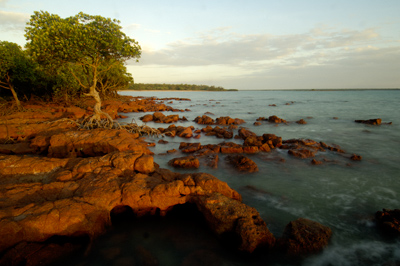
After leaving Iron Ranges, I headed west to the coast and the mining town of Weipa. This small community on the Gulf of Carpentaria is home to one of the world's largest bauxite mines. It was a chance to refuel, resupply, and take a shower after five days in the bush.
Old Telegraph Line (OTL)
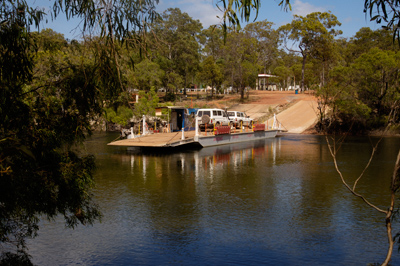
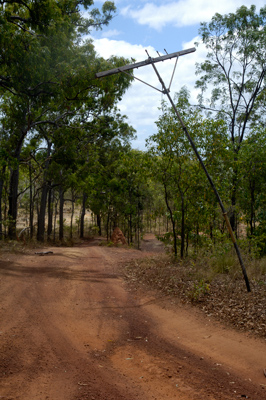
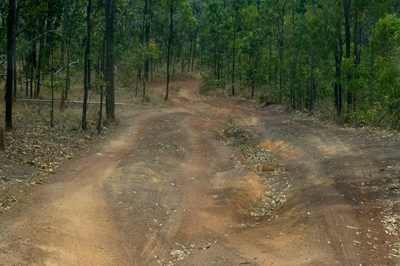
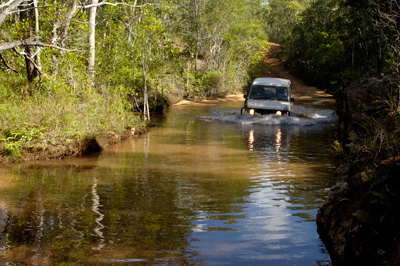
From Weipa, I headed north along the Old Telegraph Line (OTL) toward the Tip. This track follows the route of the original telegraph line that connected Australia to the rest of the world. The track is rough and challenging, with numerous creek crossings and deep sandy stretches.
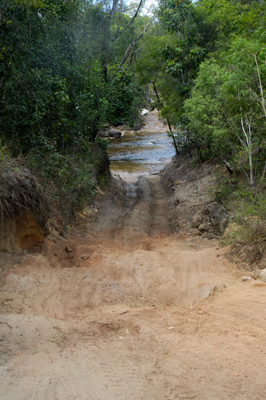
The OTL is one of the most challenging tracks in Australia. It requires careful planning and preparation, and many travelers choose to avoid it in favor of the bypass roads. However, the track offers a unique experience and a chance to see the Cape at its most remote.
The Tip
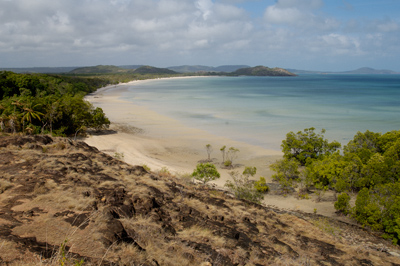
Finally, after almost two weeks of travel, I reached the northernmost point of the Australian continent. Standing at the Tip of Cape York, looking out across the Torres Strait toward Papua New Guinea, was an incredible feeling. It was the culmination of a journey that had taken me across some of the most remote and beautiful country I had ever seen.
Conclusion
The Cape York Peninsula is one of Australia's last great wilderness areas. It is a place of incredible diversity, from the arid cattle stations of the interior to the lush rainforests of the coast. It is home to some of Australia's rarest and most endangered species, and it offers a glimpse into a world that few people ever get to see.
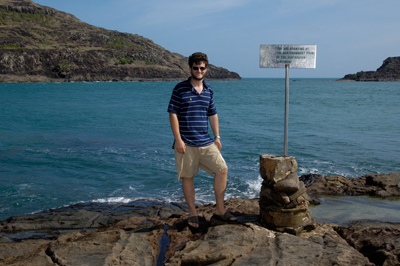
My journey to Cape York was one of the highlights of my year in Australia. I saw incredible birds, experienced amazing landscapes, and met wonderful people. It is a place I hope to return to someday, to see the things I missed and to experience once again the magic of Australia's remote north.
| Introduction | Artemis | Iron Ranges | Weipa |
| OTL | The Tip | Conclusion |